What Colour is Home
Meditation & Conversation with
Andrea Walsh
Introduction
When I ask artist Andrea Walsh about how her work and understanding of home intersects, she pauses for a long time before explaining that “home has become very much part of a holistic way of looking at everything.” Walsh describes herself as both an artist - she studied fine art, then undertook a masters degree in glass, and her work can be found in collections belonging to the V&A and National Museums Scotland - and a maker; she set up her studio in 2005 and works across ceramics, glass and metal. Residencies in rural Argyll and heritage factories have transformed her practice.
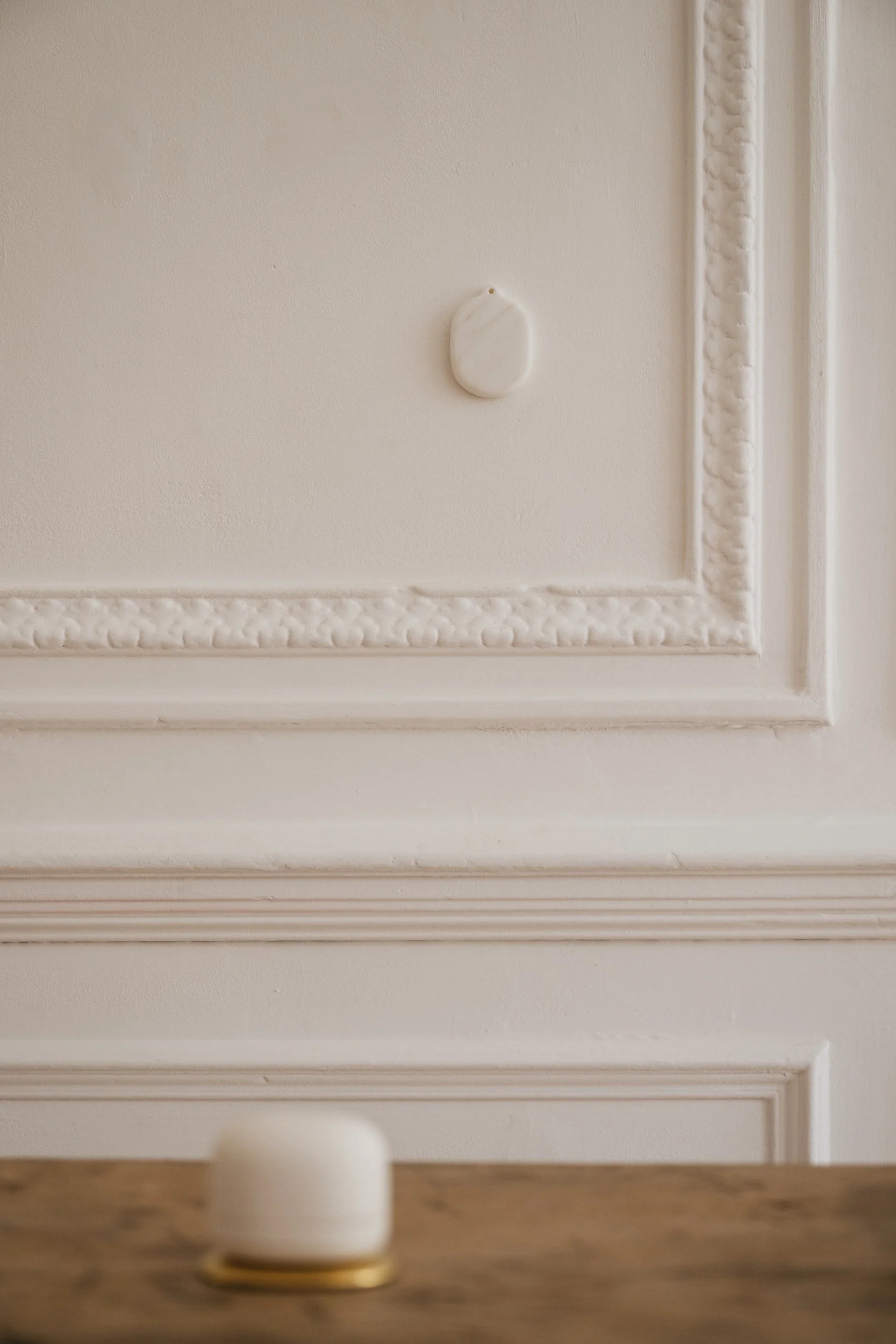
Walsh lives and works in East Lothian, Scotland, where natural light remains a constant inspiration as “one of the fundamental qualities in [her] work”. There, the values of “comfort and safety and softness and living in an environment I enjoy”, so key to her whitewashed home, are “very much what my work has become; the way I look at materials, I feel the same way about my home.”
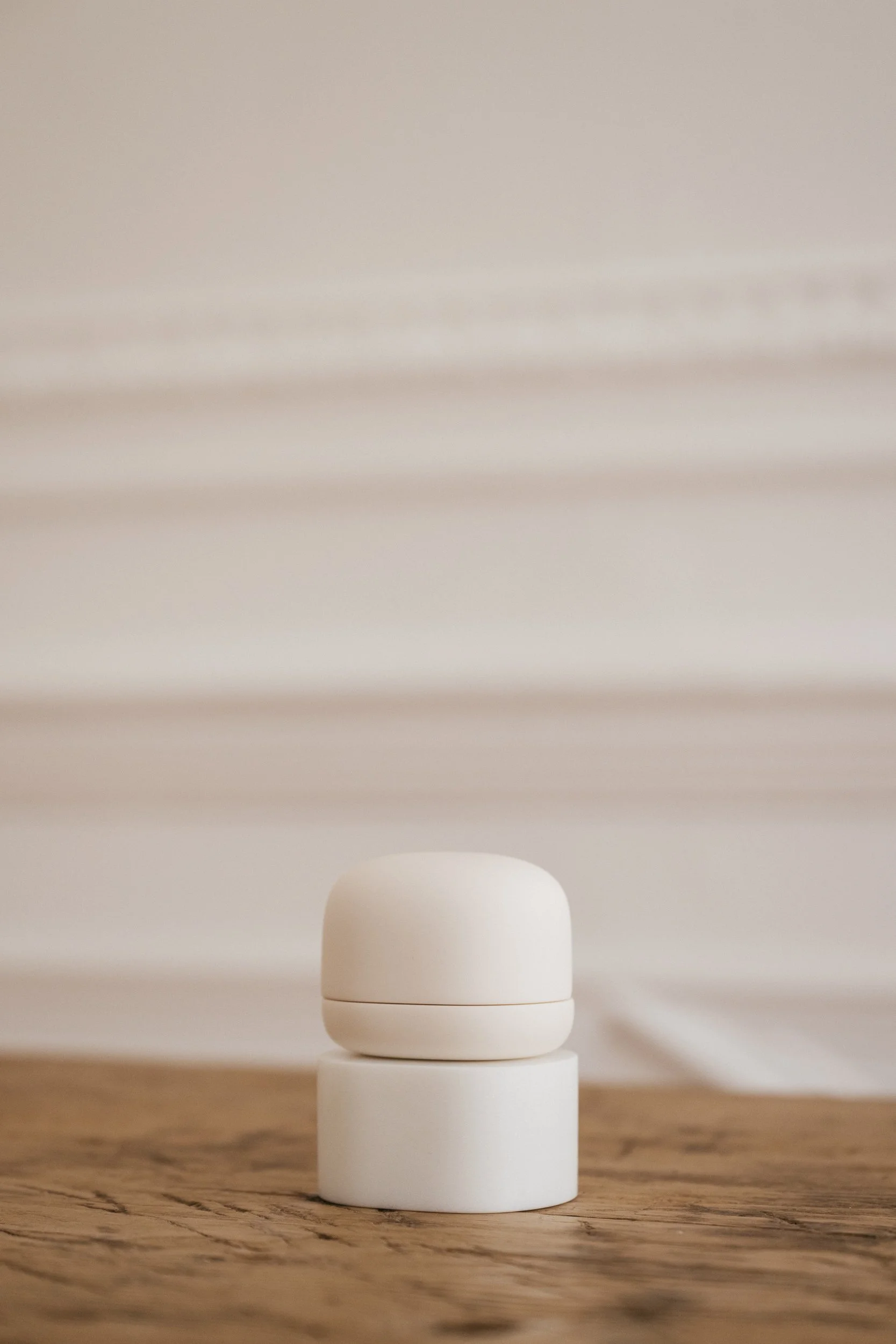
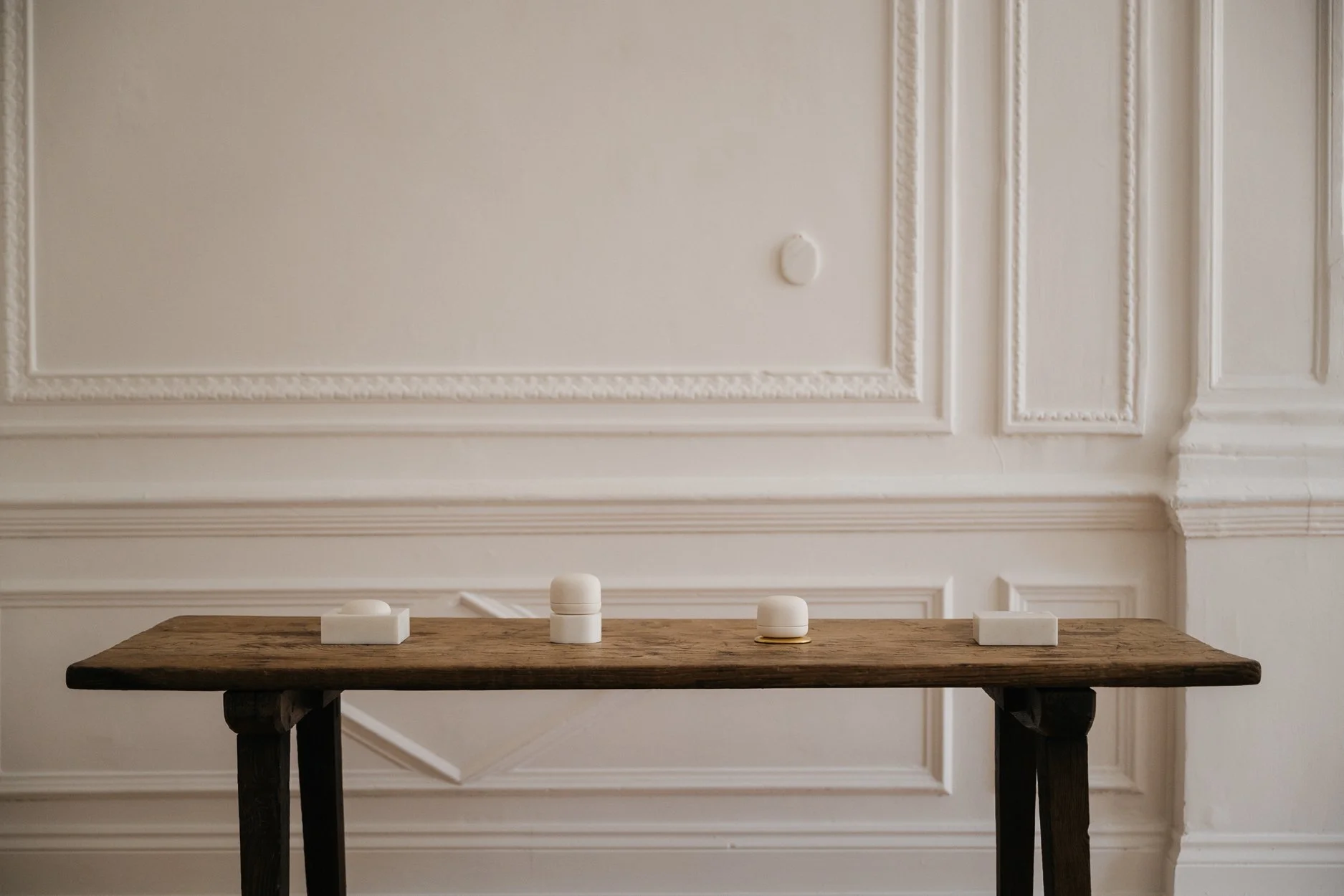
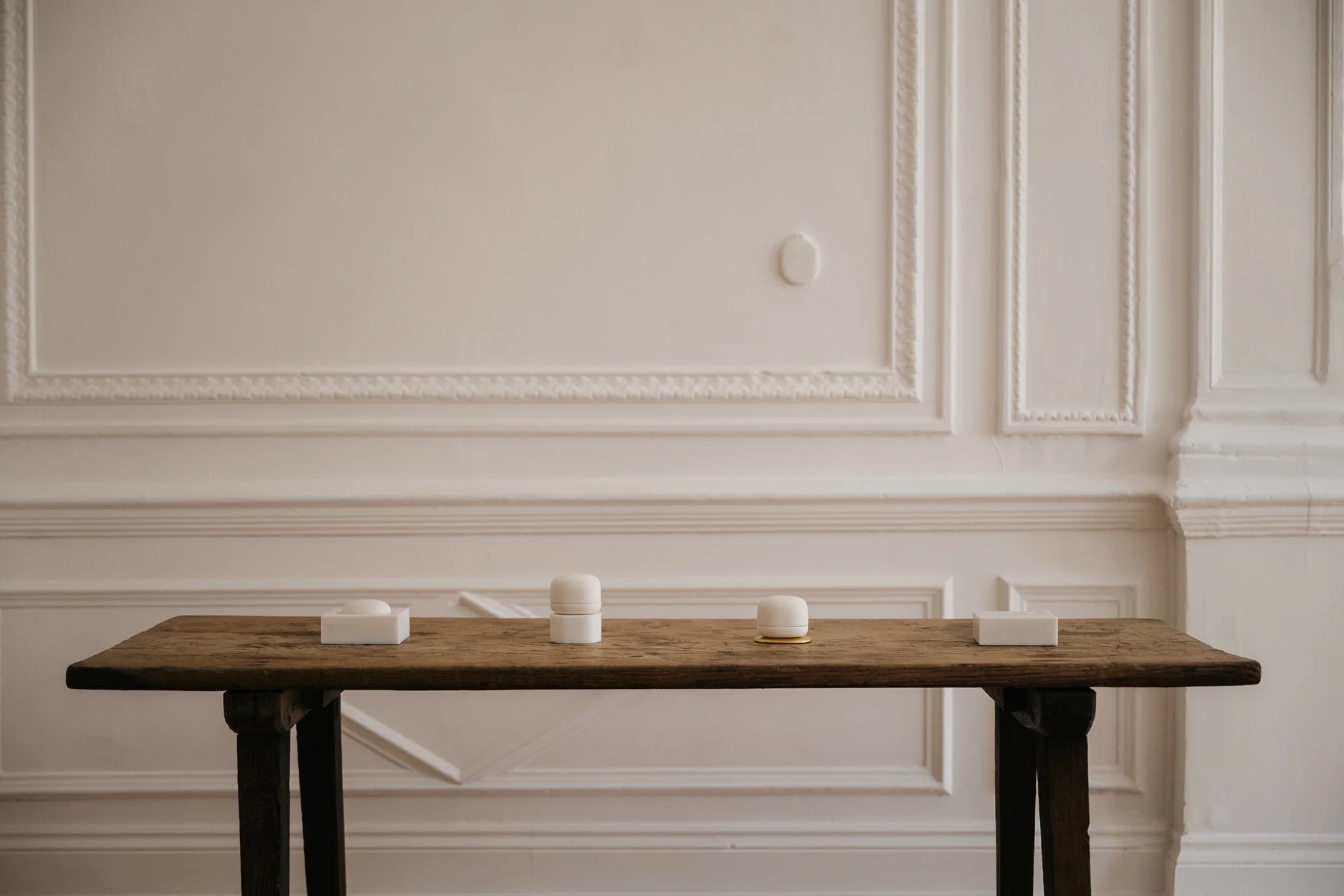
Walsh makes small sculptures and vessels, things that invite tactility, that become treasures in people’s homes as much as they do more formal collections. Invitingly rounded, precious objects that demand a space much larger than them to be savoured. They are the result, she explains, of patience: “everything I do is very time-consuming,” Walsh says. “I’m often thinking a few years ahead when something kind of manifests in the studio.”
How would you describe what you create?
My work is very materials-based, and it's very much about feeling and intuition. It evolves through process in the studio, working out how materials might work together, how colour comes about in certain materials and how they sit together. It’s borne of a tacit knowledge in making.
Has there been a moment during your career when you felt your practice shift into a different one kind of making or another?
There have been a few pivotal points. Going back to my degree: it was Fine Art and a very very conceptual, very ideas-based course. The opportunity to work across so many different materials and ways to express yourself was just huge. Then, I started to be specifically interested in the use of light, and that really brought me to using glass almost as a vessel for investigating light. That started a really concentrated period of time where I studied further in glassmaking and the technology behind it, and it was very much a focus of my practice for some time.
You’ve done a number of residencies - a home, of sorts, for your work at specific times. How has this changed your process?
Residencies have exposed me to amazing skill bases, so I’ve learned about the very practical side of things but also been given the time to really think and absorb myself in the ideas behind my practice. Both opportunities brought other materials back into my work, and meant the materials that I use are very linked through traditional practices. I use a lot of casting processes which go across the materials that I use, so it all kind of feeds into one another.
Cove Park, in rural Scotland, offered me the first opportunity after education to work in a very special environment; it offered both isolation as well as the opportunity to be in conversation with other artists from so many different fields. You’d just have people drop into your studio. That concentrated time was really huge for my work, from then on, I was a full-time maker.
A couple of years later, I did a residency within the Wedgwood Factory with Minton. Before then, I didn’t have any specific ceramics training; I adapted some of my processes from my glass-making, borrowed a bit from here and there. So that was an incredibly concentrated time of learning. It was a really privileged experience, to learn from people who had worked a lifetime in that environment, sharing their skills and knowledge and gaining access to the archives. It taught me how to do things properly and enabled me to create a body of work that really helped me realise my ideas in the making.
Light is clearly important to your work, but how does colour play out in your work?
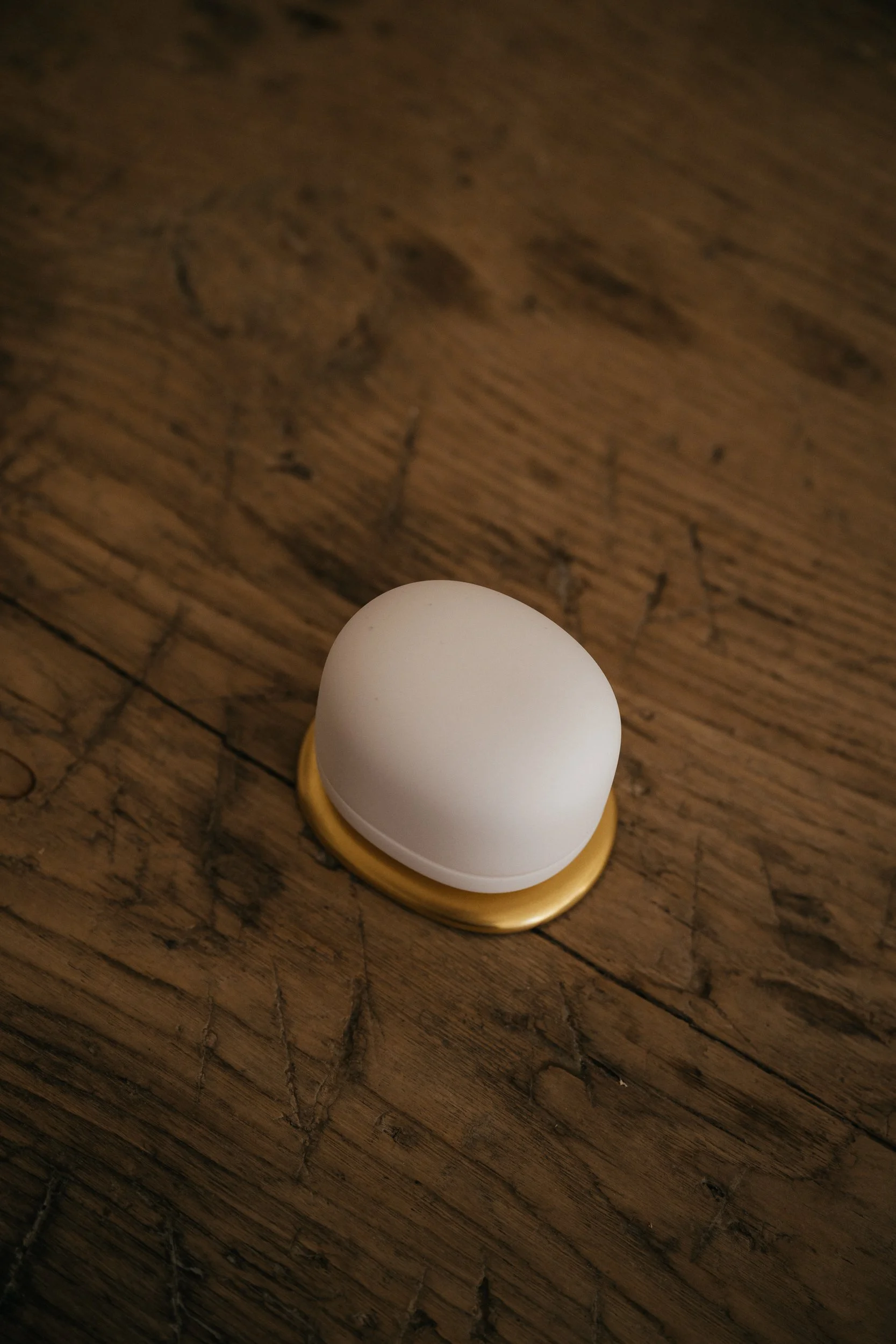
I use colour in a much more subtle way than I used to; my palette has become more refined over the years I’ve been making. I’ve become much more interested in the natural color of materials and the different qualities of those materials. So really, it’s about a tonal range within work and a palette of materials, rather than exploring lots of different colors purposefully. I’m really interested in black for its density, for its response to light, its density. Black glass, for instance, becomes almost oily-looking if it's exposed to heat in a certain way. I’m still very drawn to yellow, which has featured in my practice for quite a while now. It brings me joy, and it seems to bring other people joy. It's a very emotive color in all different shades, and I really enjoy it for those small bursts of colour within my work.