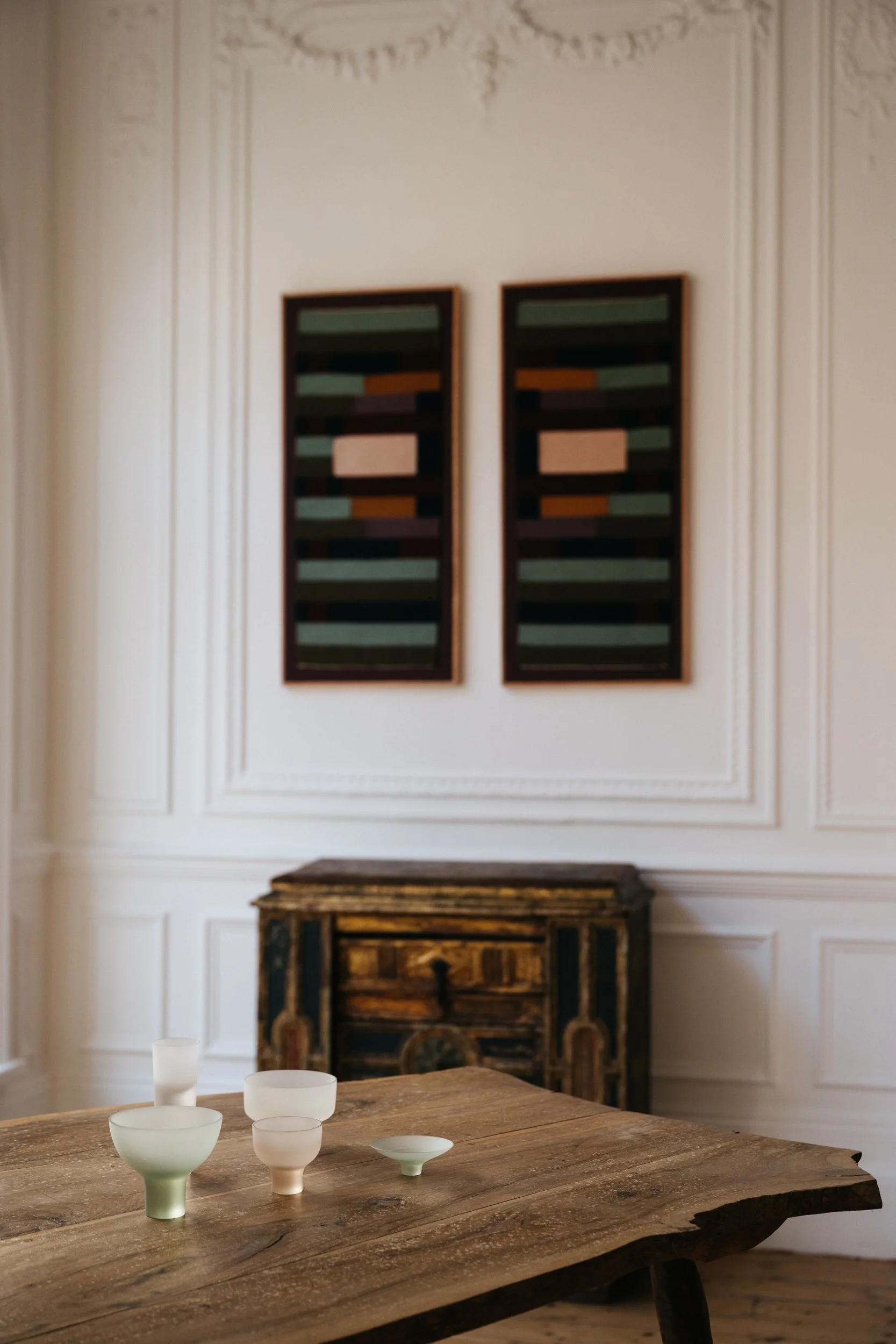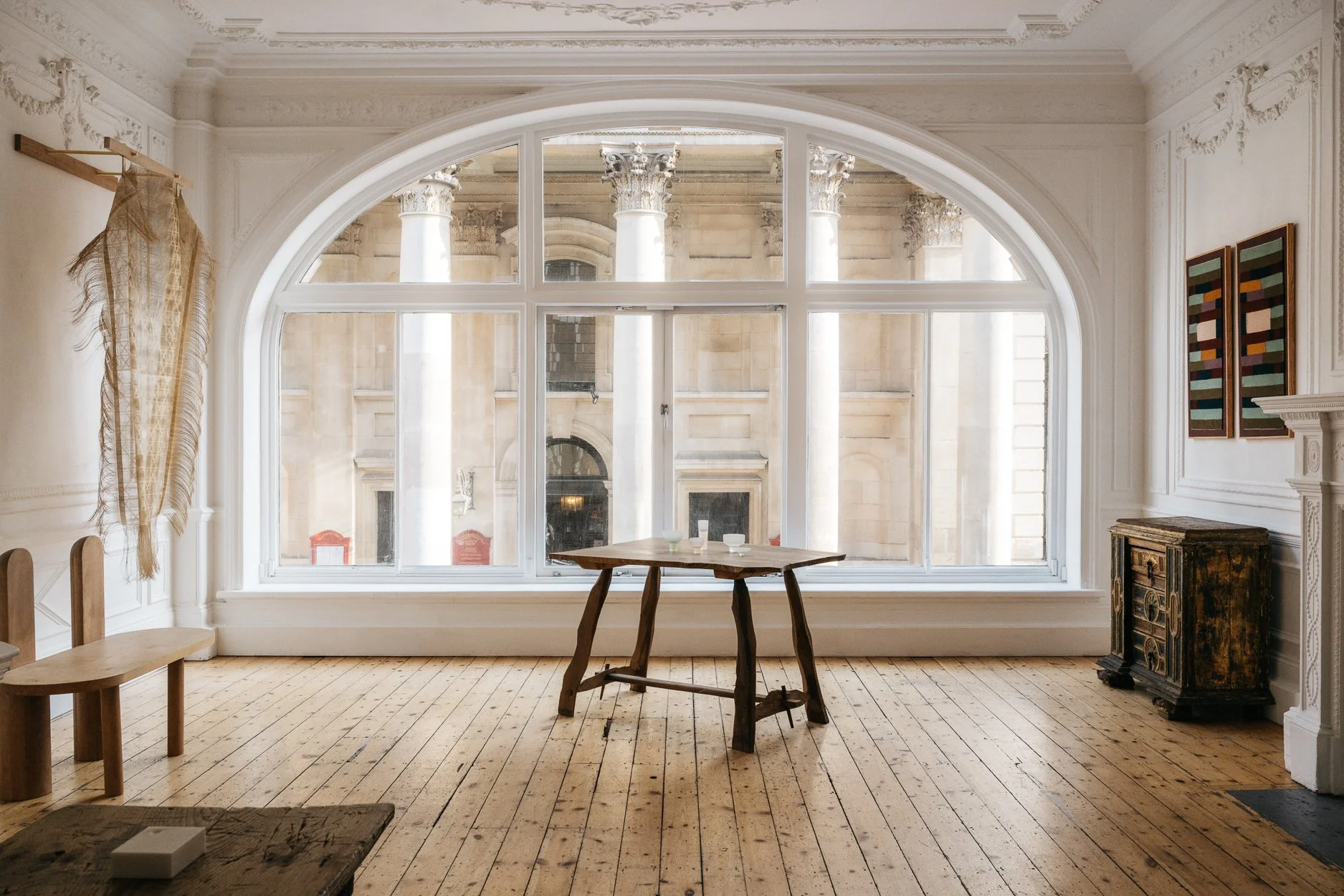
What Colour is Home
Meditation & Conversation with
Celia Dowson
Introduction
Celia Dowson embarked on a degree in ceramic design with the intention to become a sculptor, but found herself turning to the practice in search of relief from the rigour of mould-making. “It was challenging because I didn’t have the skills yet, and it was a really long process,” she explains from her home in South London. “So I started making sculpture; objects to have in the home that were made by looking at shadows and then sculpting figures.” They were pieces inspired, Dowson says, “by how we can be attentive to our surroundings, how that actually can be what’s nourishing for us, and how we can create places where we can be still in chaos, just for a minute.”
That notion of presence has infused Dowson’s practice as a ceramicist, cast glass artist and maker ever since. How to capture the fluidity of life in something you can hold in your hands? How to respect the vitality of the pause as much as the necessity of the shift? Lately, during the first year of her first child’s life, Dowson says that she has been thinking a lot about home - “something that’s shifting and changing continually; it feels good, because within my work, and the way I look at materials, it’s always about the fact that even though things might feel fixed for us in a moment, they are always changing.”
Dowson blurs the boundaries between her ceramics and glass-casting practices, deploying what she calls “a mish-mash of two distinct materials that can behave in similar ways, using kilns and heat, but have fundamentally different properties”. For all of the precision, care and refinement needed for the process of making them, Dowson begins by “sketching” models on a wax lathe: “it’s very freeing, often my mind just goes off and suddenly there’s a shape to that.” The results are shimmering, both ephemeral and heirloom, as much at home in international museum collections and Michelin-starred restaurants as on a beloved kitchen shelf, caught in passing sunlight.
What have colour and home meant to you, of late?
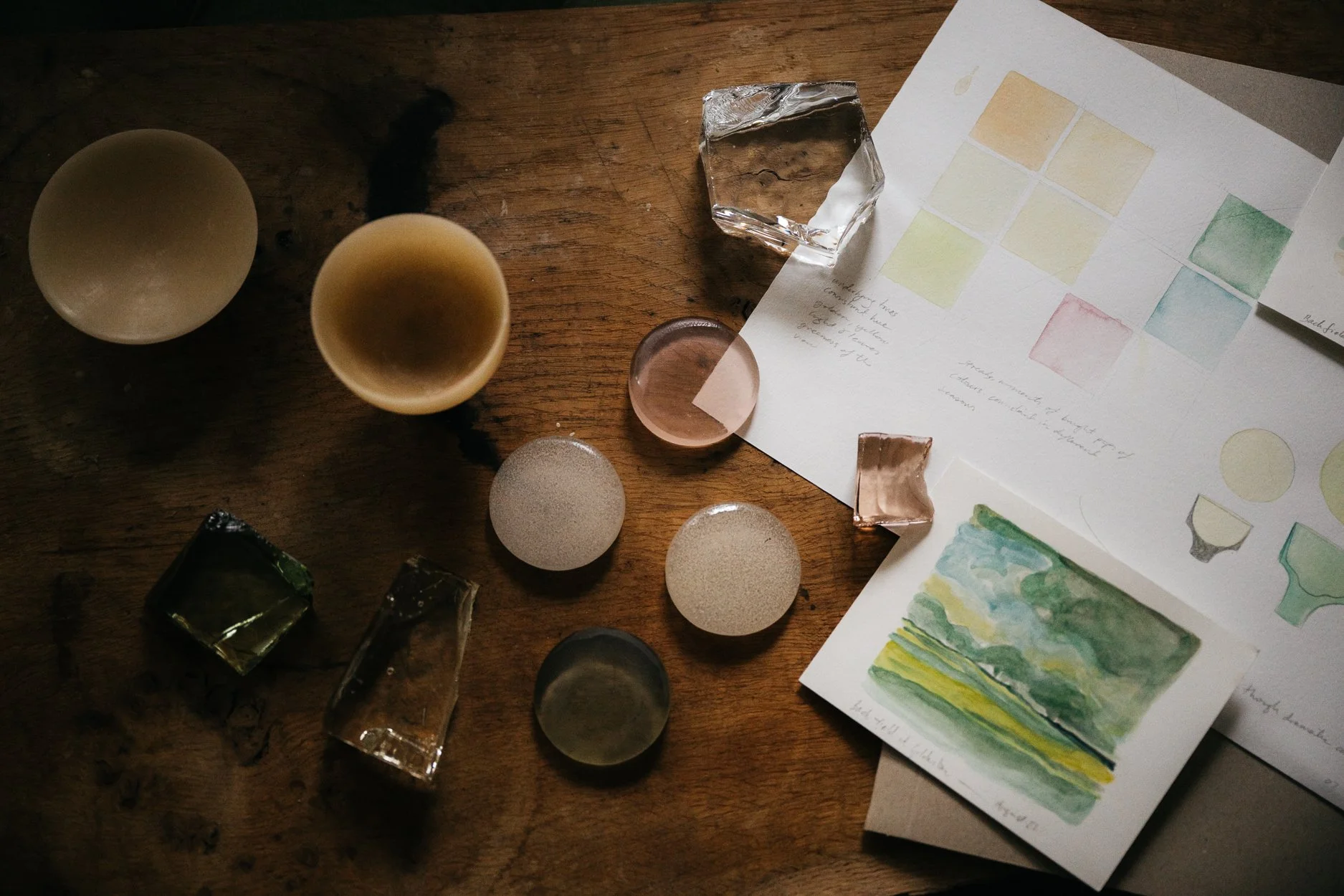
I’ve realised that home for me isn’t necessarily something that's contained, it's something that's open and free and growing. It’s a thought that transported me back to a place where my father grew up, that's always been a kind of family place, family home, and a place where I grew up, and a place where I still go to now. And there's a field at the back of this home, and it's surrounded by a forest. And then you look out over this field and you see three really beautiful, proud old oak trees. Over the past seven years I’ve made a photo album on my phone of that field from different times of the year that I've collated.
We spent my partner’s parental leave in this home, and when my daughter was three days old I took her outside for the first time. It was about 5.30am, and we went to the field and we watched the sun come up. It was a space that was transitioning, but also offered us grounding.
It felt like a good place to start: I think I’m going to create something that offers a pinpoint in time, to use colours that represent an essence of that place, but that people might also associate with a kind of comforting and homely space, because they'll all be based on the natural atmosphere.
What colours might those be?
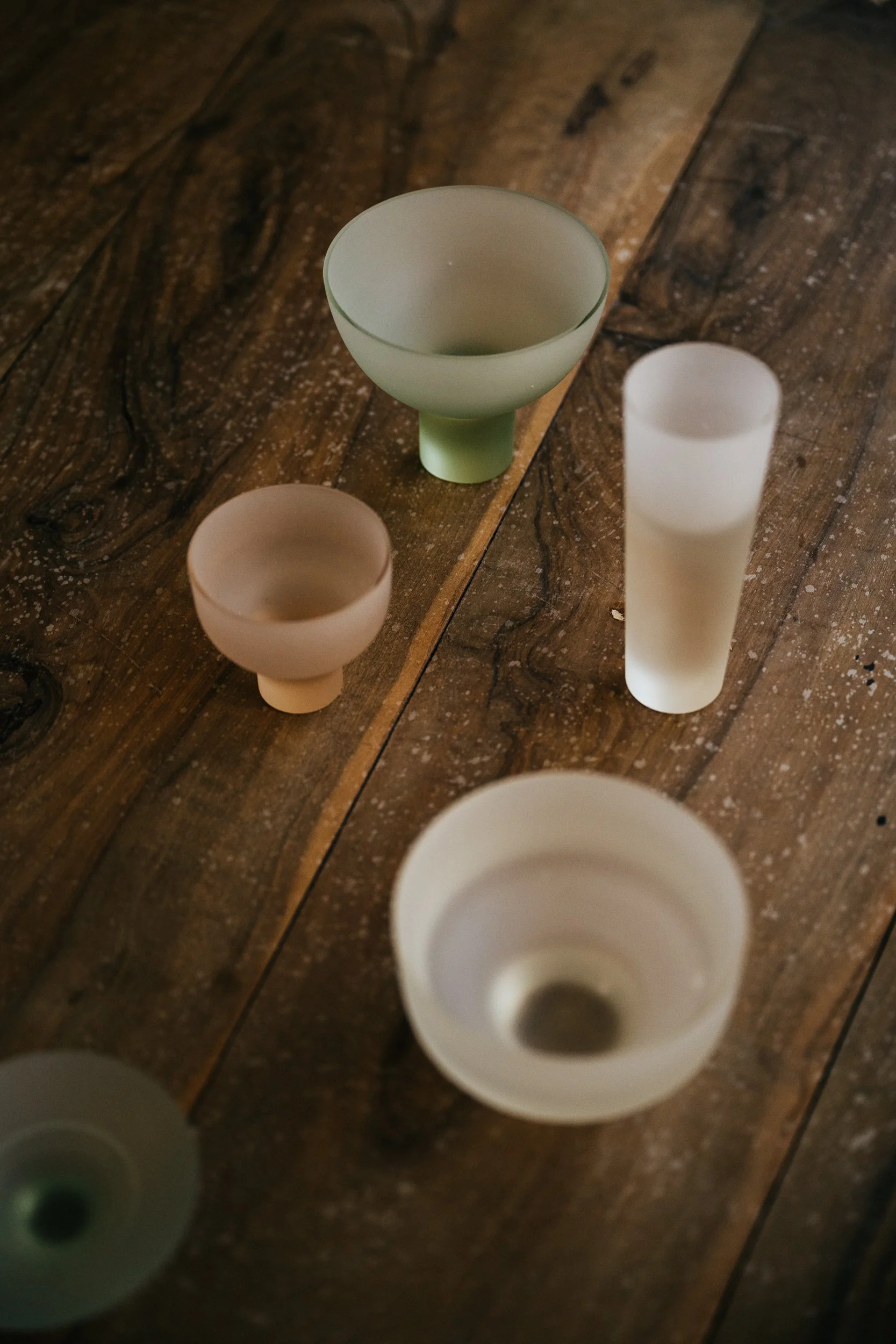
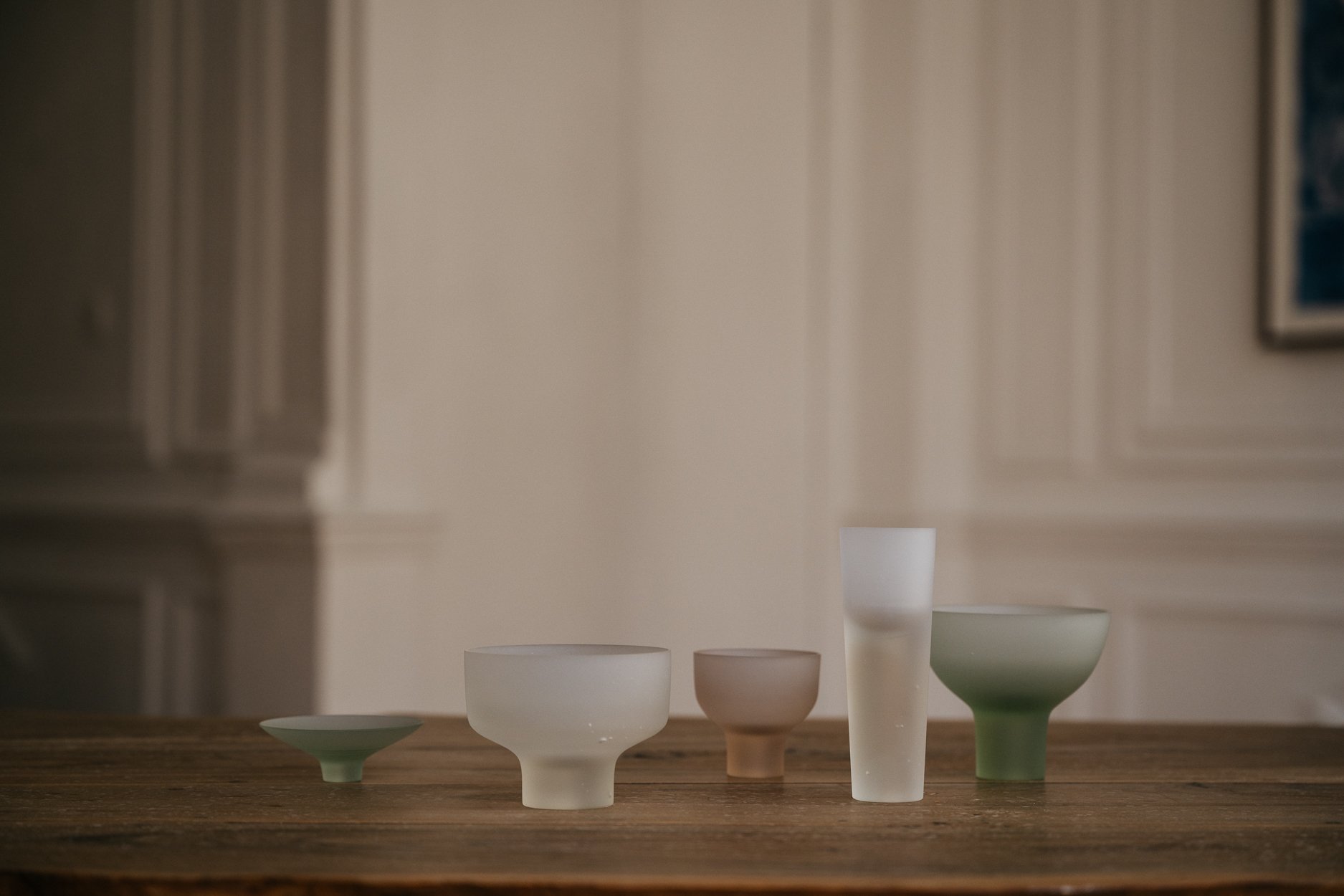
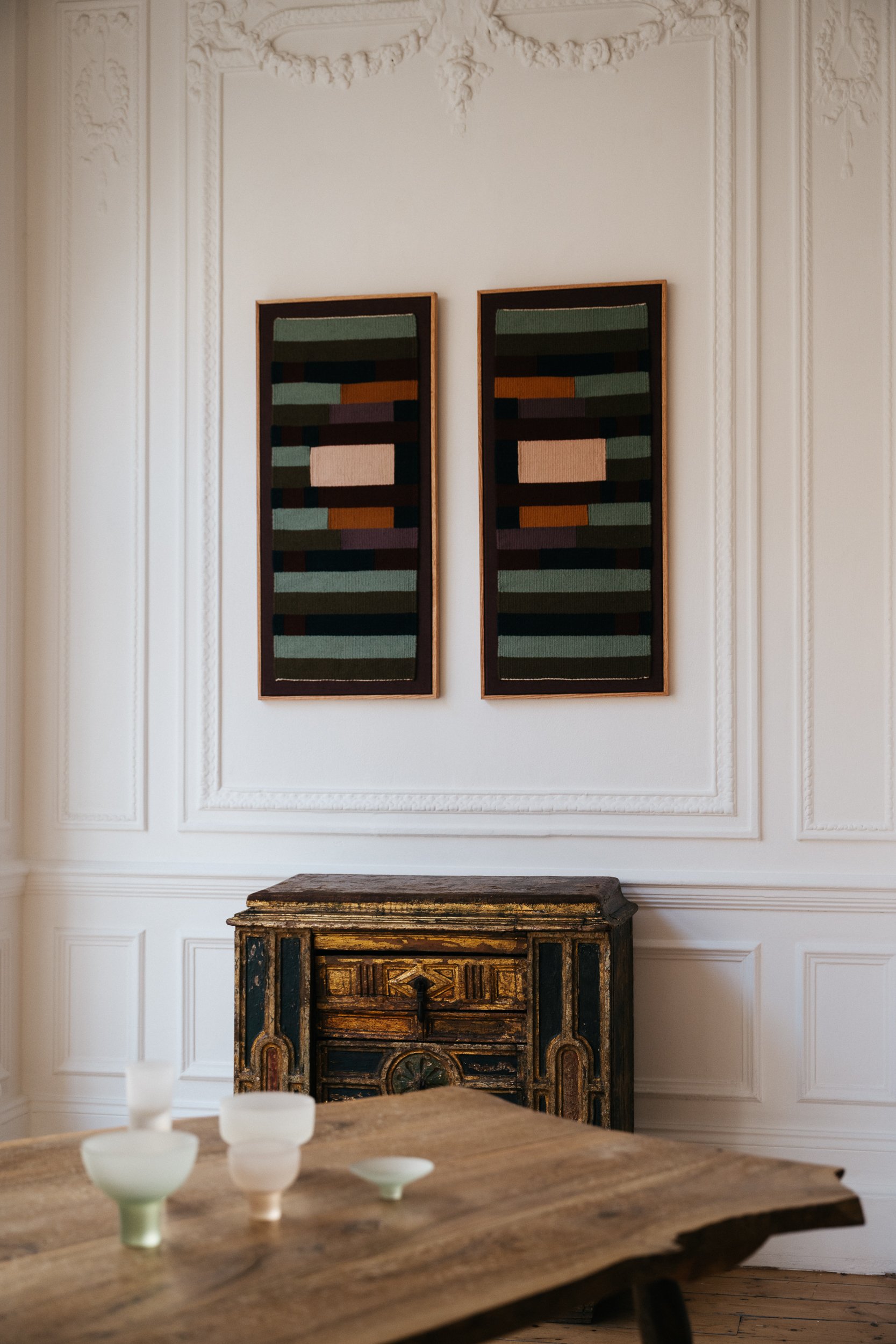
Definitely a green, but also a gold, a very light yellow gold. The feeling of something that glows. A little homage to the idea of light, dusk and dawn.
How does colour affect your work?
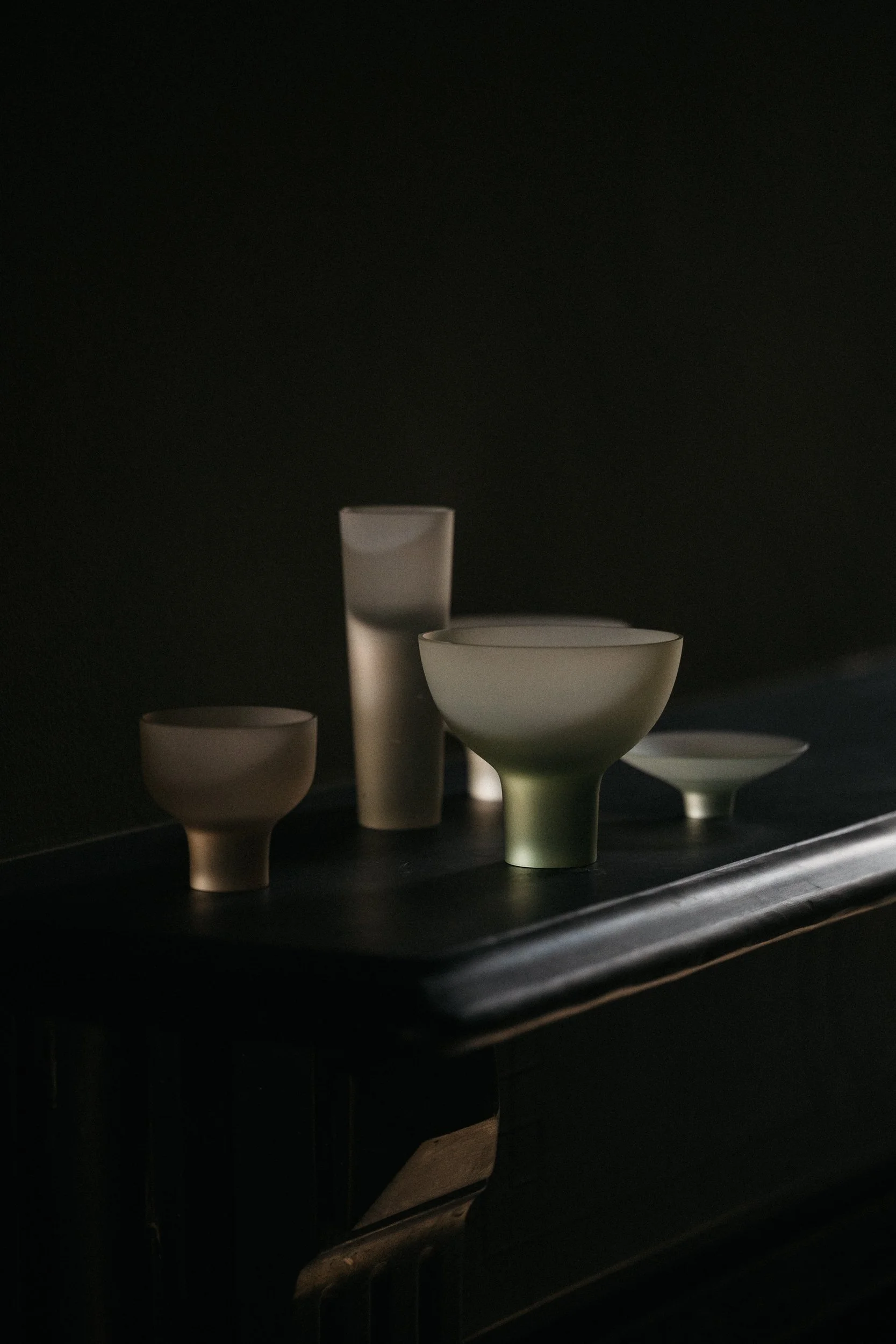
With glass, it's always been about color for me. As my practice has developed it has become a means of showing the depth of something, and how I can make objects look almost optic. There have been times where I use colors and they just feel wrong or they don't feel alive. I suppose that's what I look for when I work with color. How can you create a feeling with colour? When you polish something to a low grit, to not so high polish, you get this almost like sea glass quality, where something feels precious and quiet and subdued and like ancient. And I feel like within my work, there's something in that. It's like, how can we make glass, a material that feels hard and scary and fragile, really soft, and something that we are inclined to pick up?
You make objects that have a fundamental purpose. What does that mean to you?
I suppose objects hold a feeling, don't they? And they change a lot. They all hold feeling, and that's often negotiated by light and where they're placed. For me, what I make is all atmosphere: it’s all based in how we can connect to something around us. I do it through playing with the form and colour and natural cycles through these objects of familiarity. Take the utilitarian, the bowl, the cup or the glass. How can we make that moment feel alive and special and connected? Objects can be really truthful, whether it’s a chipped mug that belonged to your great-grandmother or a newly designed object that makes you feel something. I feel like the objects I make are all about creating a space for grounding, to remind us to be present.