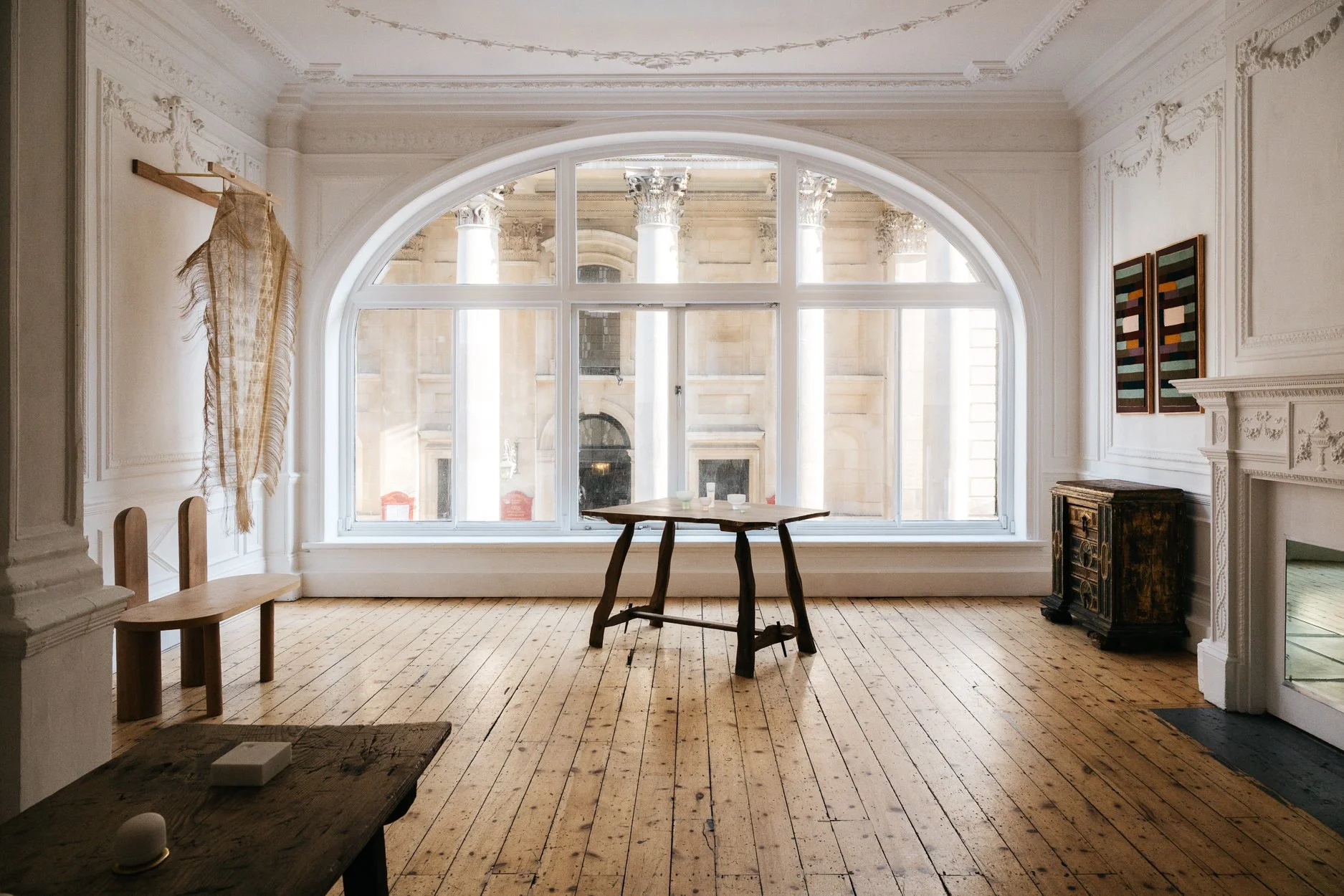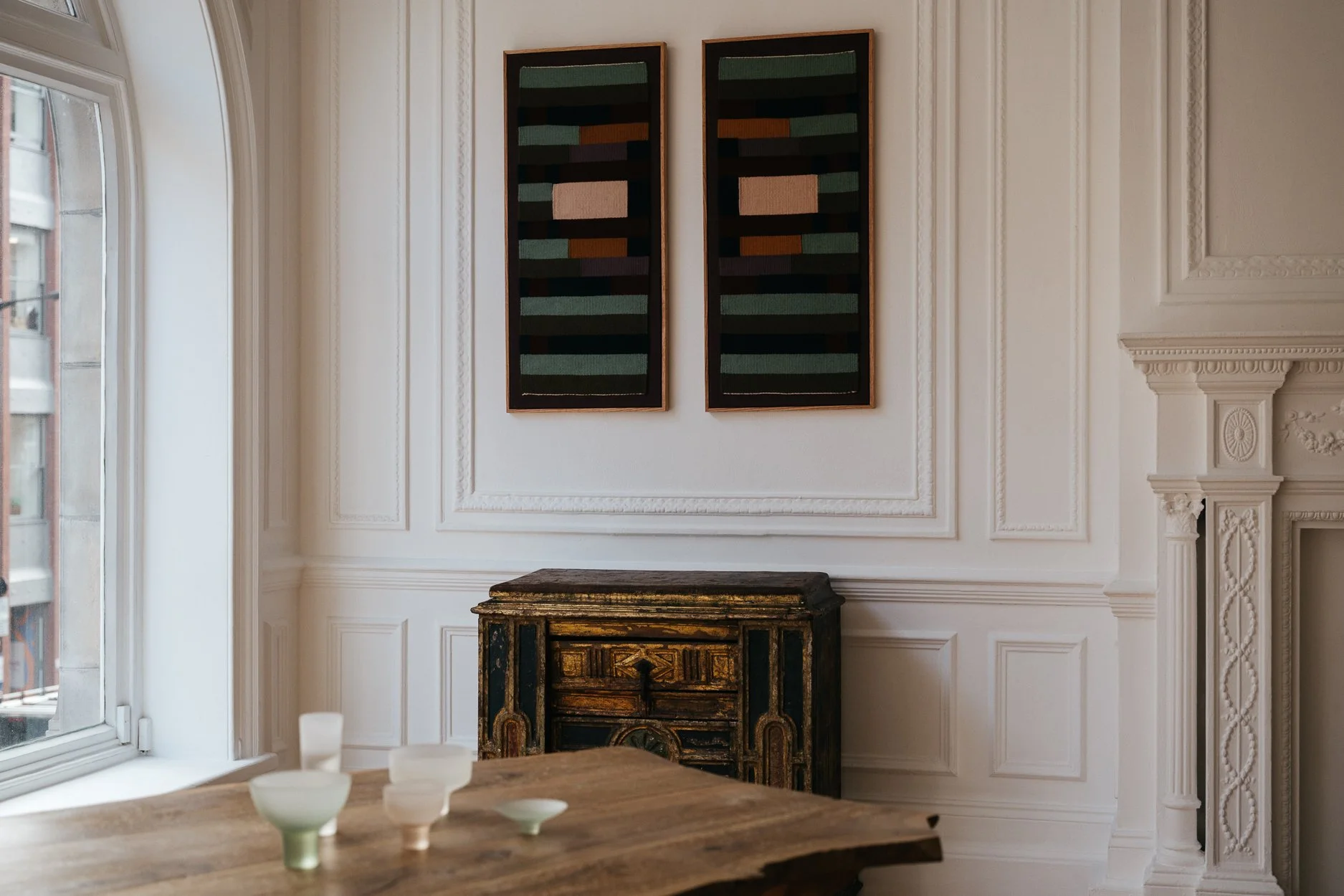
What Colour is Home
Meditation & Conversation with
Nancy Nicholson
Introduction
There is a painting that five generations of Nancy Nicholson’s family have grown up against. A landscape of Cumbrian farmland in colours that the rug-weaver and textile artist describes as “quite earthy and muddy, but with underlying jewel-tones”. Dark red and smoky blue. Born from sketches made on one productive afternoon decades ago by her great-grandmother, the painting was of the view from the room her grandfather was born in. It then hung in Nicholson’s parents bedroom when she was little, and now it hangs on the wall of the room she sleeps in with her husband and child. As we speak, her infant daughter Dot is lying on her, and, Nicholson tells me, “there is a definite similarity in the lines of Dot and the shapes in the painting.” It is the starting point, she says, when prompted to think about making work inspired by home. The colour palette from the painting flows into paint colours and textiles that surround her in the home she has now made in Devon. “It’s almost like a go-to,” she says. “It’s a point of safety, but also a reach back into my childhood.
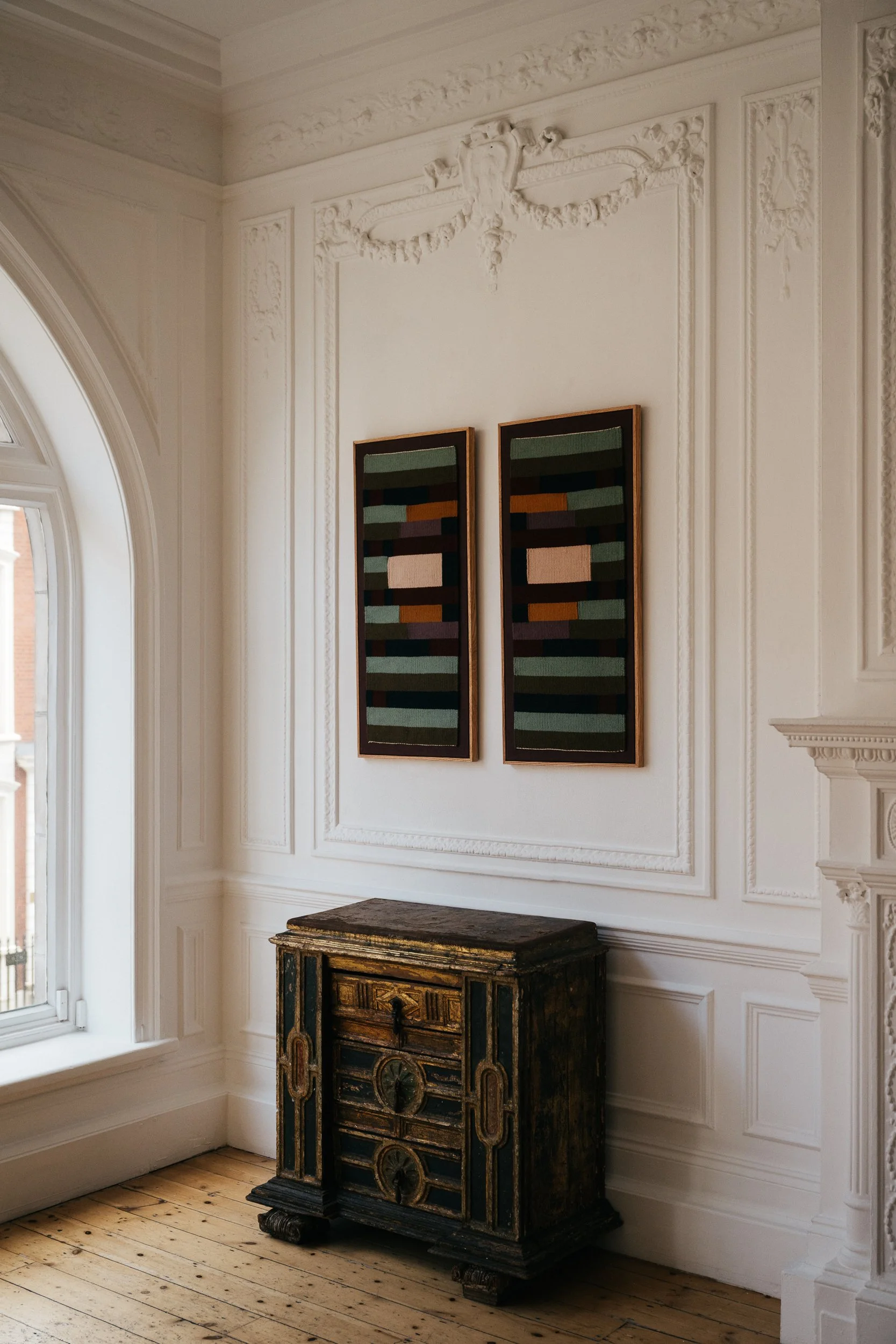
Nicholson worked as a set designer for the stage before she worked in galleries and became a rug-weaver full-time. The intersection between the land, what we can grow from it and how we use it in our homes has long been part of her life: she grew up on a farm in Cumbria that reared sheep for their wool and meat, and that wool is now woven - quite literally - into her work. Perhaps this is why Nicholson’s pieces seem as much borne of the outdoor world around us as of human hand: invitingly textured, grounded in their colour and form but of such careful refinement that they beg the time to linger and appreciate. Not unlike the raw heights of the Lake District.
Home feels really rooted in your work. I don’t know whether you’d agree with that?
Definitely. I think rugs and textiles in general have a big part to play in how we all make home, don't they? Historically that's why we started weaving, to give ourselves warmth, safety, comfort. But from a family point of view it’s also a preoccupation for us: my husband is a chef, and so as a couple we’ve kind of become obsessed with creating that feeling of warmth. Because he’s cooking and I’m weaving, it’s central to both of our work.
How did textiles arrive in your practice?
I got into textiles because I had to. I trained in set design and did that for about six years, and I was making props for a Charles Dickens production. When a weaving workshop popped up I took it, and weaving became something I did on the weekend. When I started working in commercial art galleries I became familiar with the art history of carpets and tapestries, and that enabled me to see weaving more as an art form; I realised the mastery of it. I was taking lessons from a master weaver when I decided to buy a massive loom, which was a ridiculous decision, but I had to make it: it was the start.
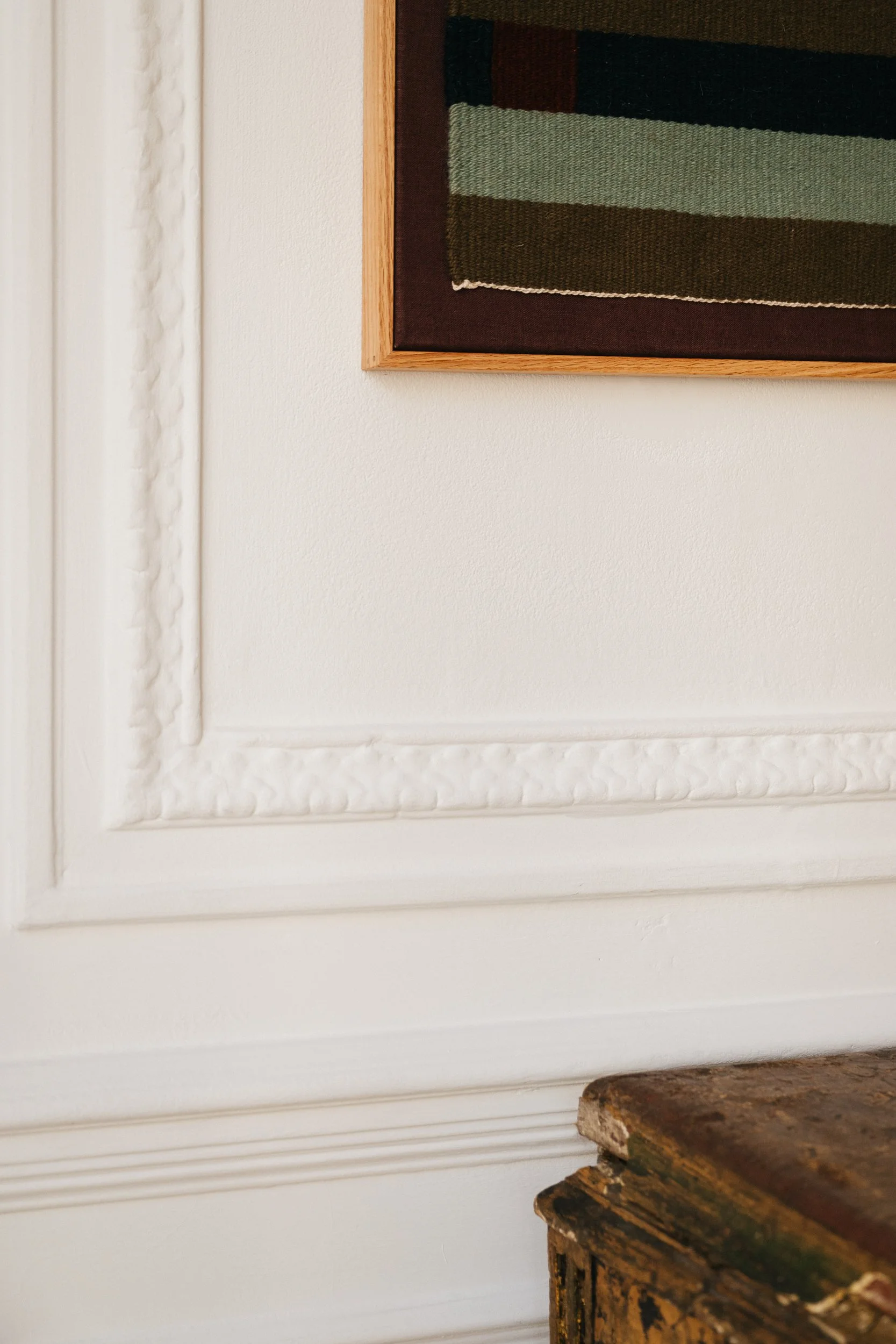
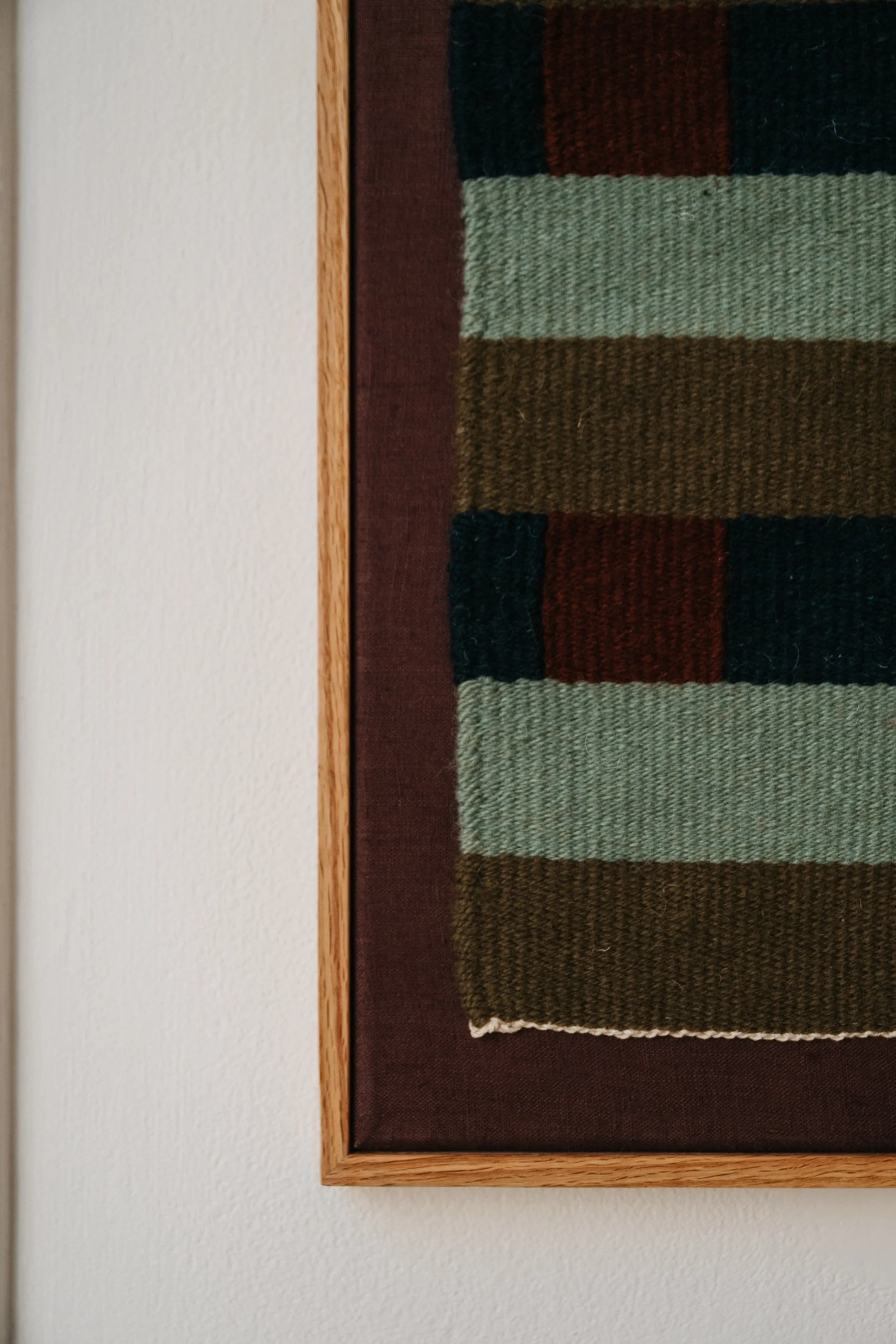
How did the loom change things?
It felt so natural as soon as I made that leap. It felt like a form of expressing myself that I'd been looking for for a long time. I've always done stuff with my hands, and did a lot of drawing, but the loom just slotted into place. It felt like something that had been missing and that I found again, in a way. It’s still the one I make my work on now; I have two smaller looms to work things out when something is on it, but that’s the main one that I use. It arrived in bits, with one sheet of instructions in Finnish. I had to put it together and take it down, and put it back together again until I got it in the right setup. That process creates a partnership. It’s made entirely out of wood and it’s older than I am, so it morphs and changes according to its environment. And nobody else notices those differences, but it means that it's a kind of constant conversation between me and it, which I really enjoy.
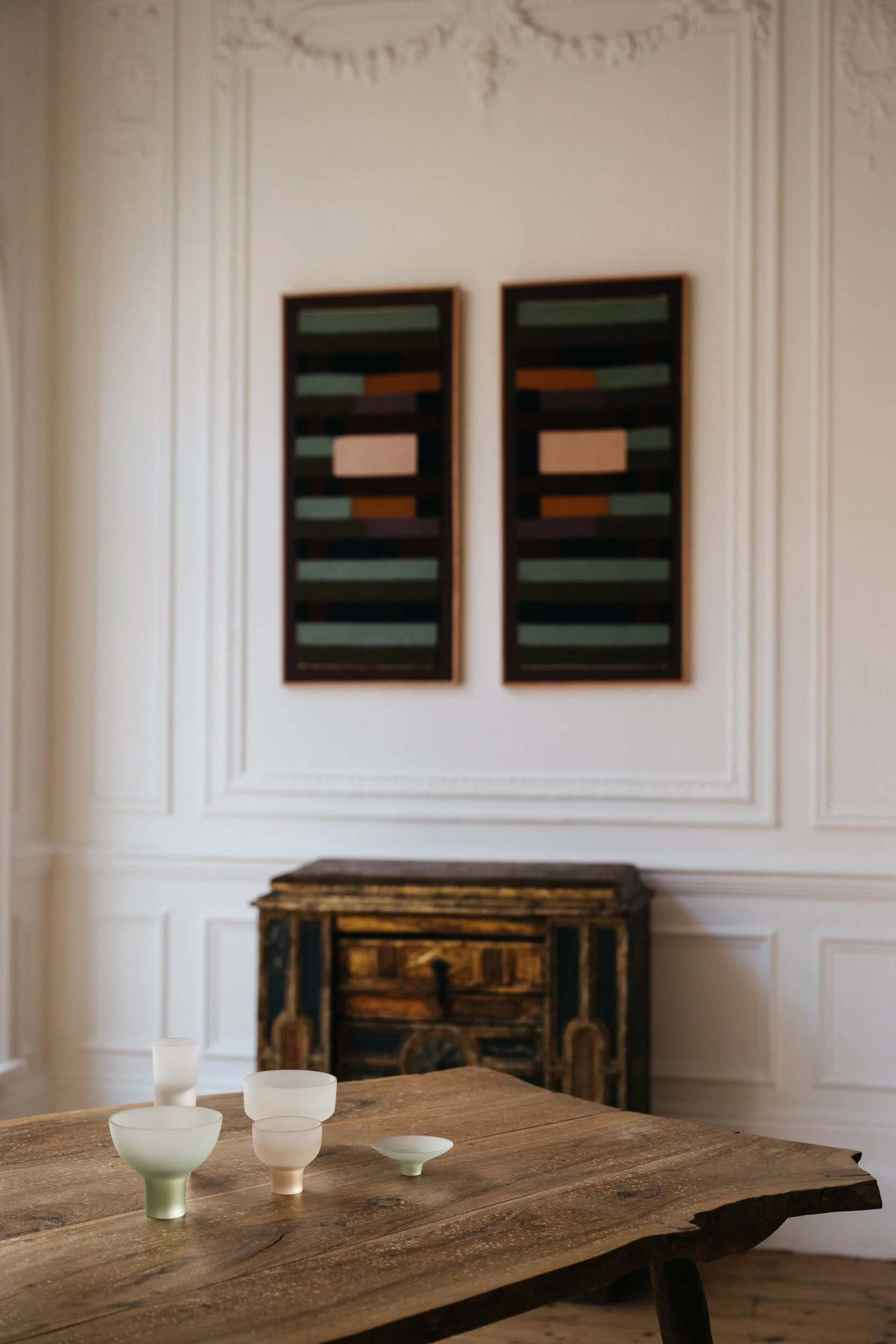
How has the role of colour changed in your work?
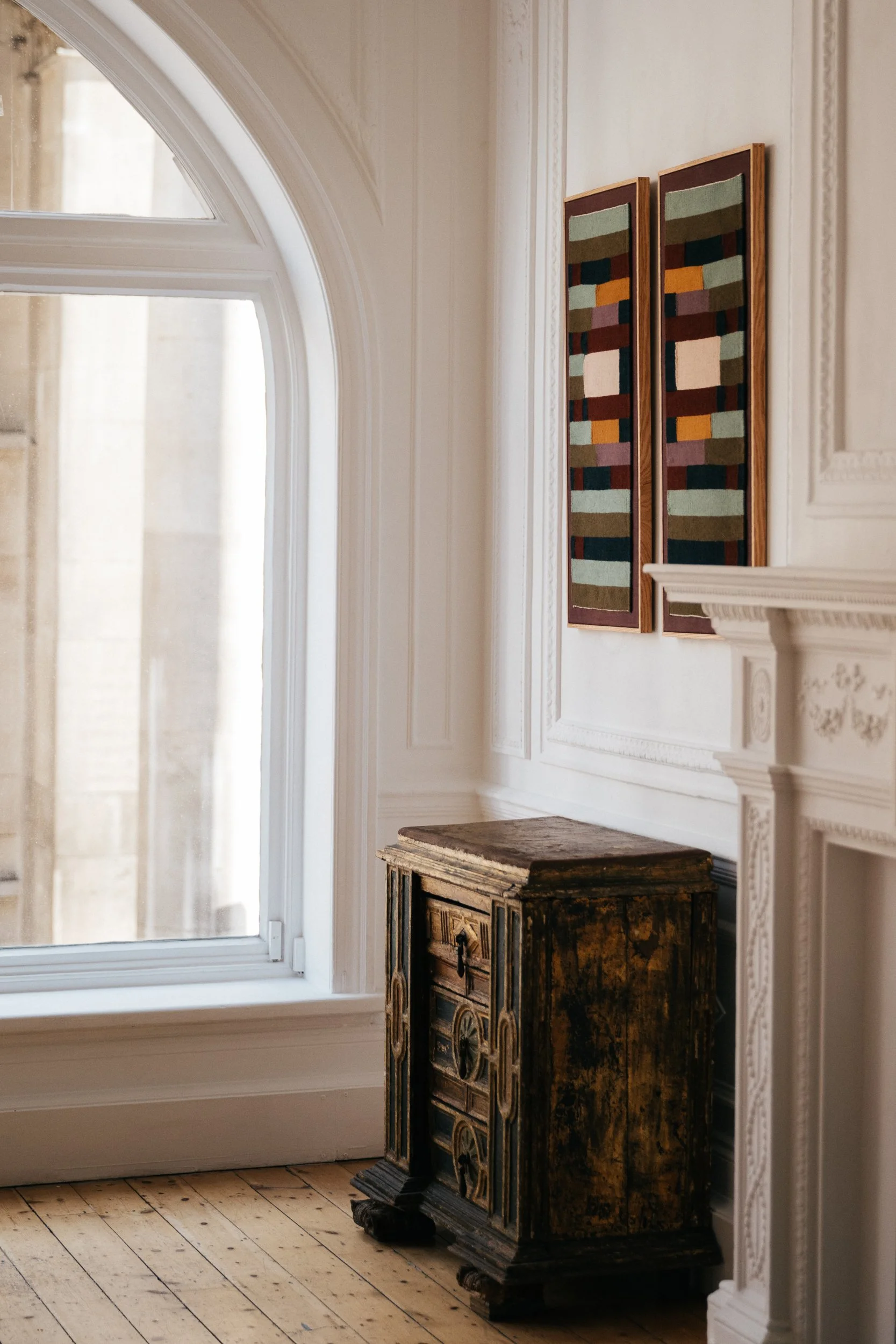
I think I’ve always been a bit afraid of colour, until recently. I’m not sure why that is but I think it might have something to do with finding the medium in which I work most naturally. When you’re weaving, you can’t just mix colours together and make a new one. You’re looking at the colours very differently. They’re set things; they have their identities already that you have to work with, rather than them being tools in which you can create whatever colour it is that you've got in your head. I find that restriction useful, because I can't just paint whatever picture I want. It's what I enjoyed about set design, too: there's a restriction of what you can put on stage. I think working within restrictions is something that I tend to find very fruitful from a creative point of view.