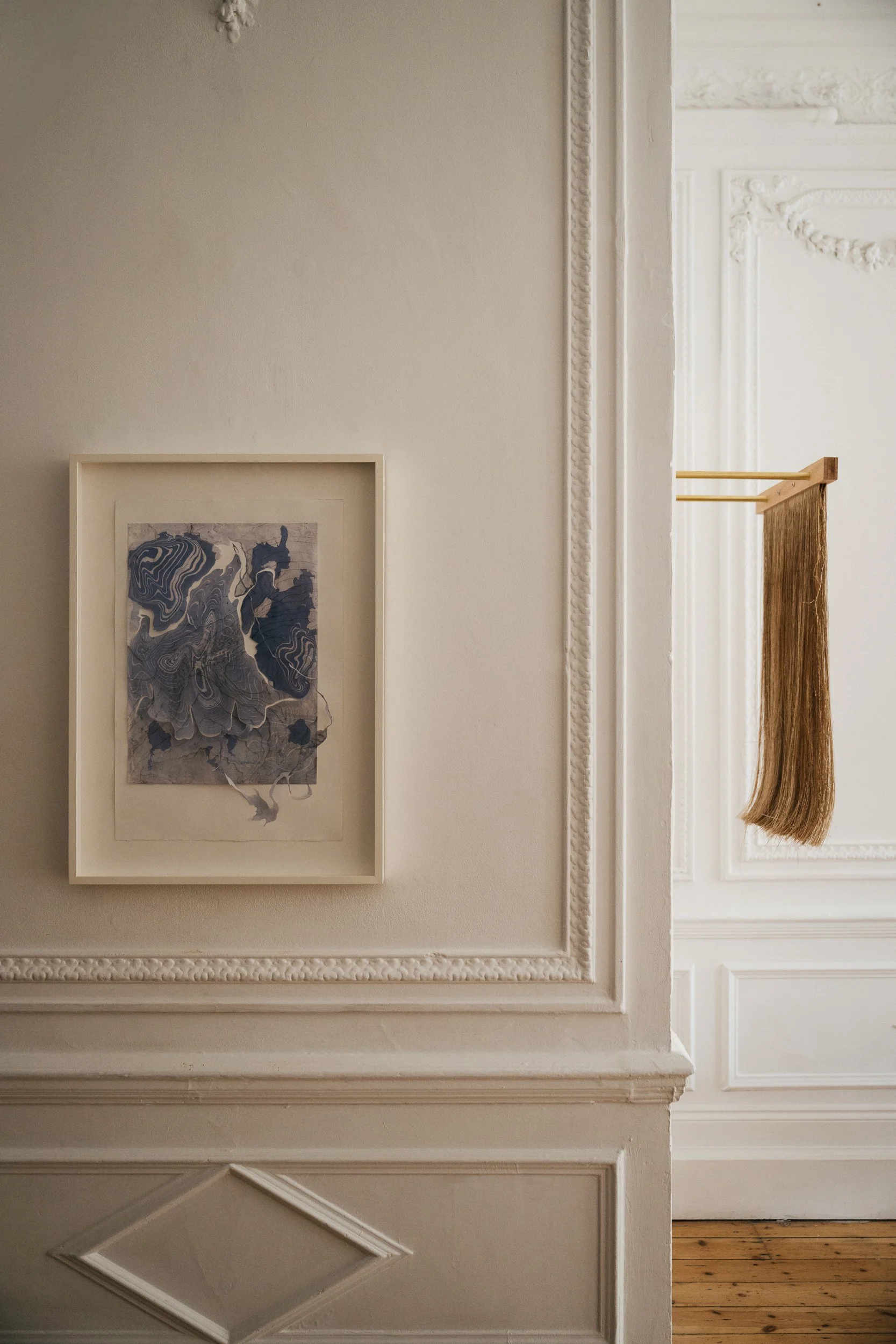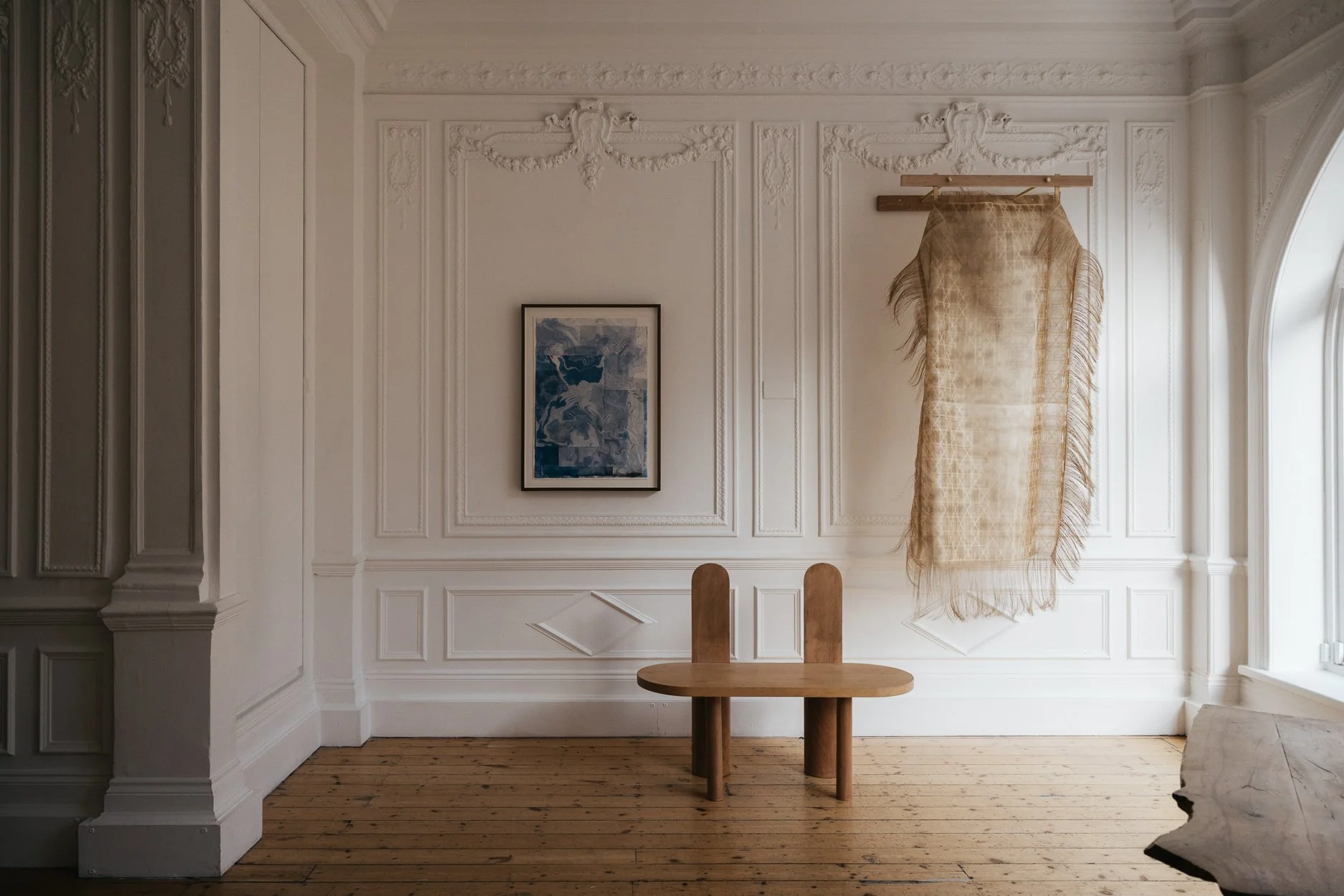
What Colour is Home
Meditation & Conversation with
Stephanie Forrest
Introduction
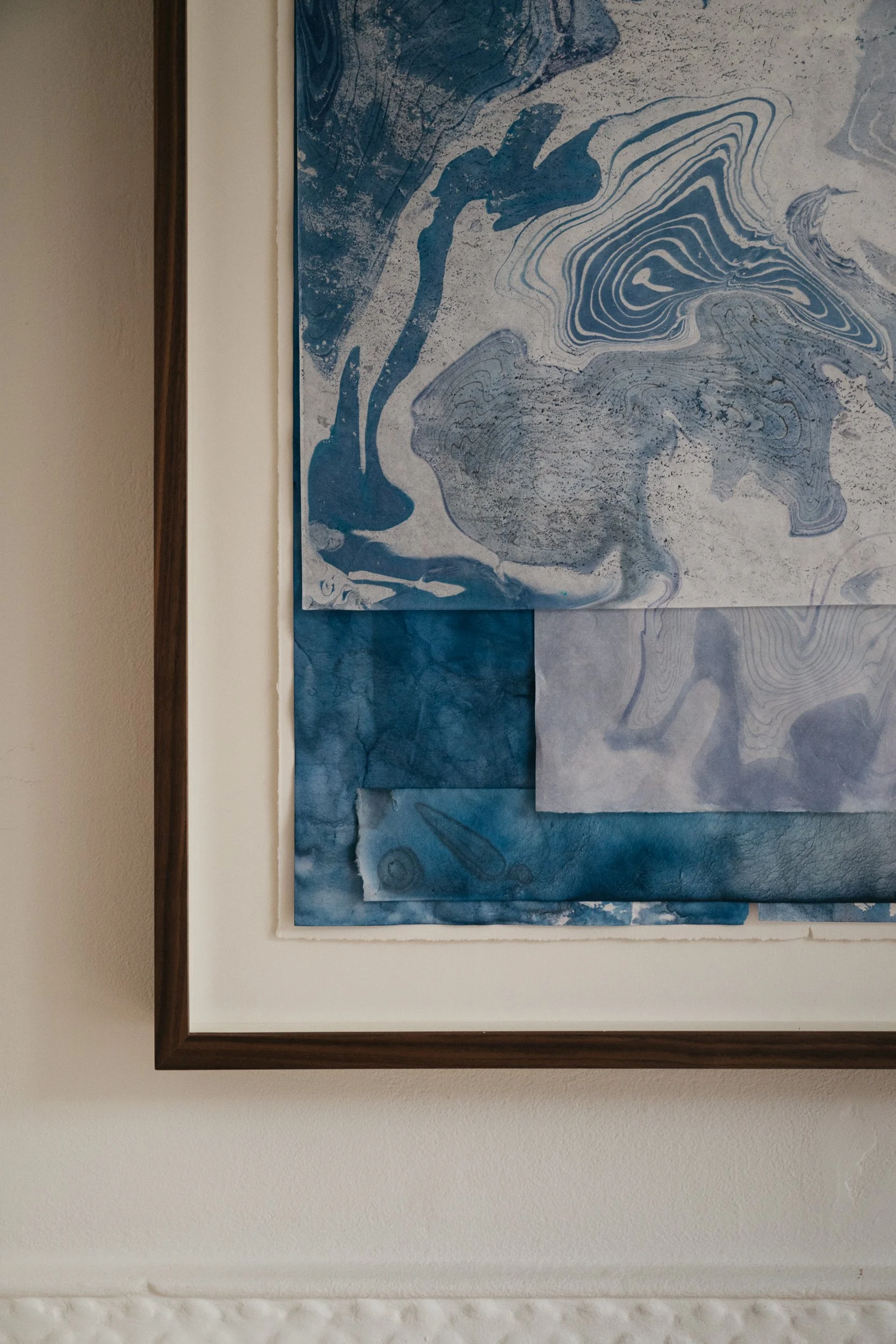
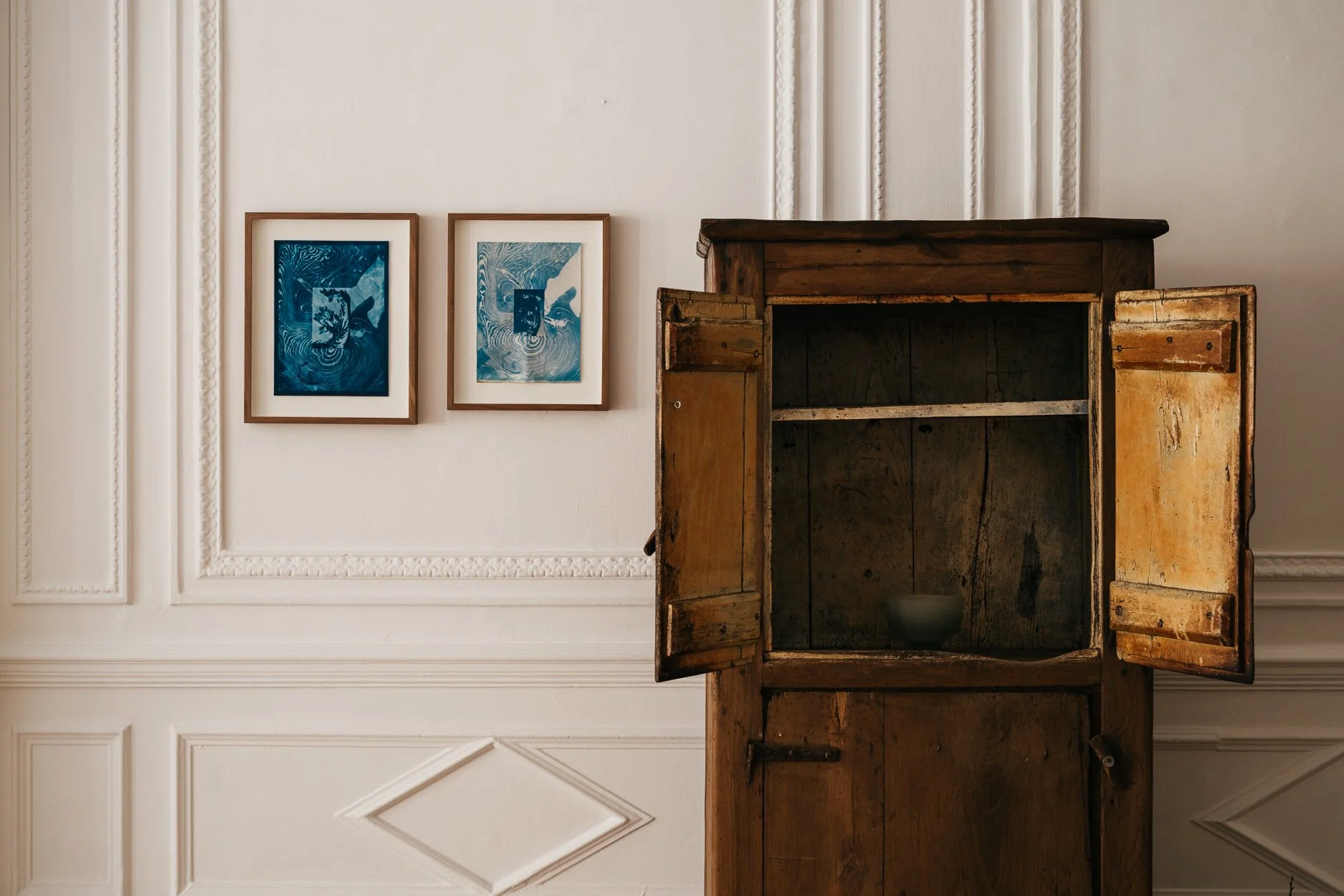
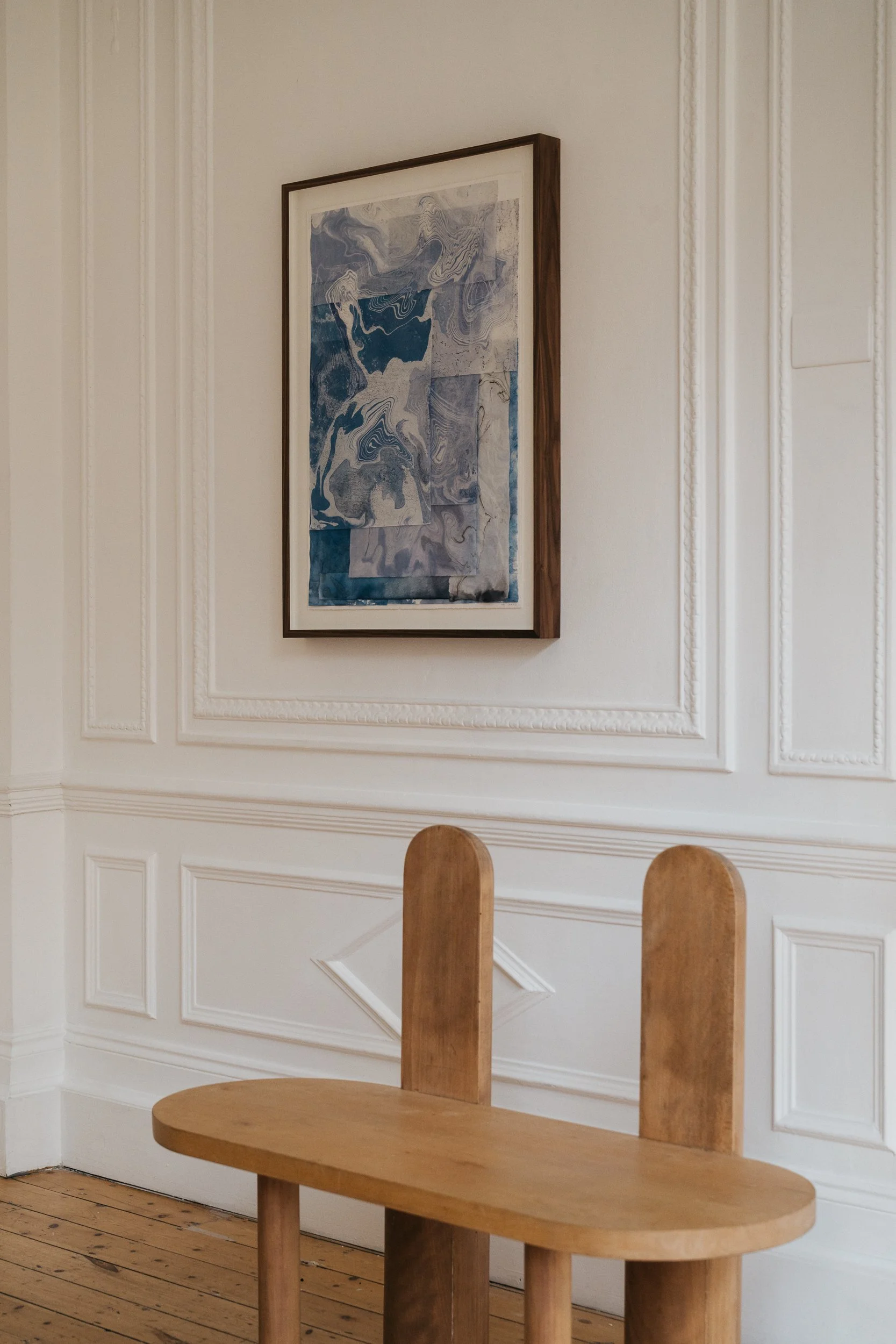
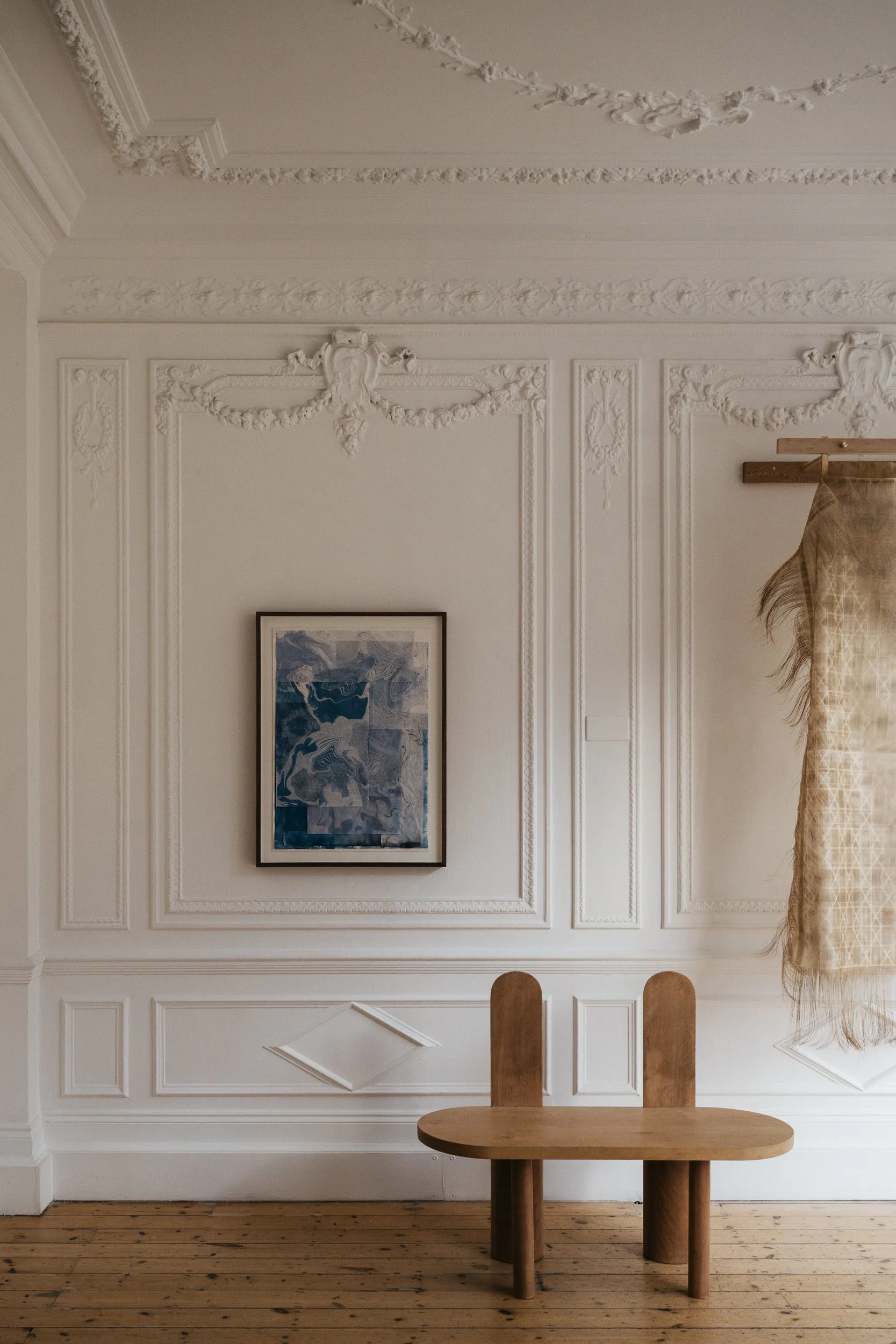
In many ways, it’s fitting that Stephanie Forrest has landed upon an exploration of the colour blue. The artist, painter and printmaker has always worked alongside movement - whether that be of humans or more autonomous, organic beings - and her recent work has seen her dive into experiments inspired by suminagashi, the ancient Japanese art of floating ink on water. This, Forrest explains, has offered a way of playing with the concepts of sinking and floating, fluidity and change - all matters that have been particularly close to home for her over the past few years.
By her own description, Forrest has spent “a long time in art education, experimenting and wearing so many different hats and working in so many different ways.” After studying History of Art at the Courtauld Institute of Art, she then completed an MA in Modern & Contemporary Art: History, Curating and Criticism before working for artist and potter Edmund de Waal. When the opportunity to take a sabbatical arose in 2018, she became one of just 30 students to take a place at The Royal Drawing School’s The Drawing Year. “It was just the best year of my life. It was so amazing to finally be taken seriously as an artist in my own right, to be doing a really deep dive into my drawing practice. Everything else just spun off and blossomed from that point.”
Since then, Forrest’s work has constantly evolved, reflecting the seismic changes in her life on the page. She has worked with choreographers and dancers, as well as exhibited at de Waal’s studio.
Does home intersect with your creative life?
Yes, in some very, very deep ways. London very much felt like home for me; I moved there when I was 18. But when my husband and I knew we were going to have a baby, we moved to Hampshire, nearer to my parents. It was a rupture: both a homecoming and a return to a place I thought I knew. I still feel like I’m creating a home; it’s not quite here yet. Home to us now is a cottage on a farm that’s in the middle of absolutely nowhere. It’s been almost like a wiping clean of the slate. I’m able to just walk out onto the South Downs way, and tune into the landscape and soundscape of where we are. It became a reset, in terms of what I wanted to make and my ideas of painting and drawing. In my studio, I look out on fields, a beautiful herd of Aberdeen Angus cows and lapwings. Sometimes I feel like the alien in this situation, that there’s this vast ecosystem. I’ve been looking a lot at prehistoric paintings of animals, and thinking about that human-animal relationship, in my work.
Was colour involved in that reset?
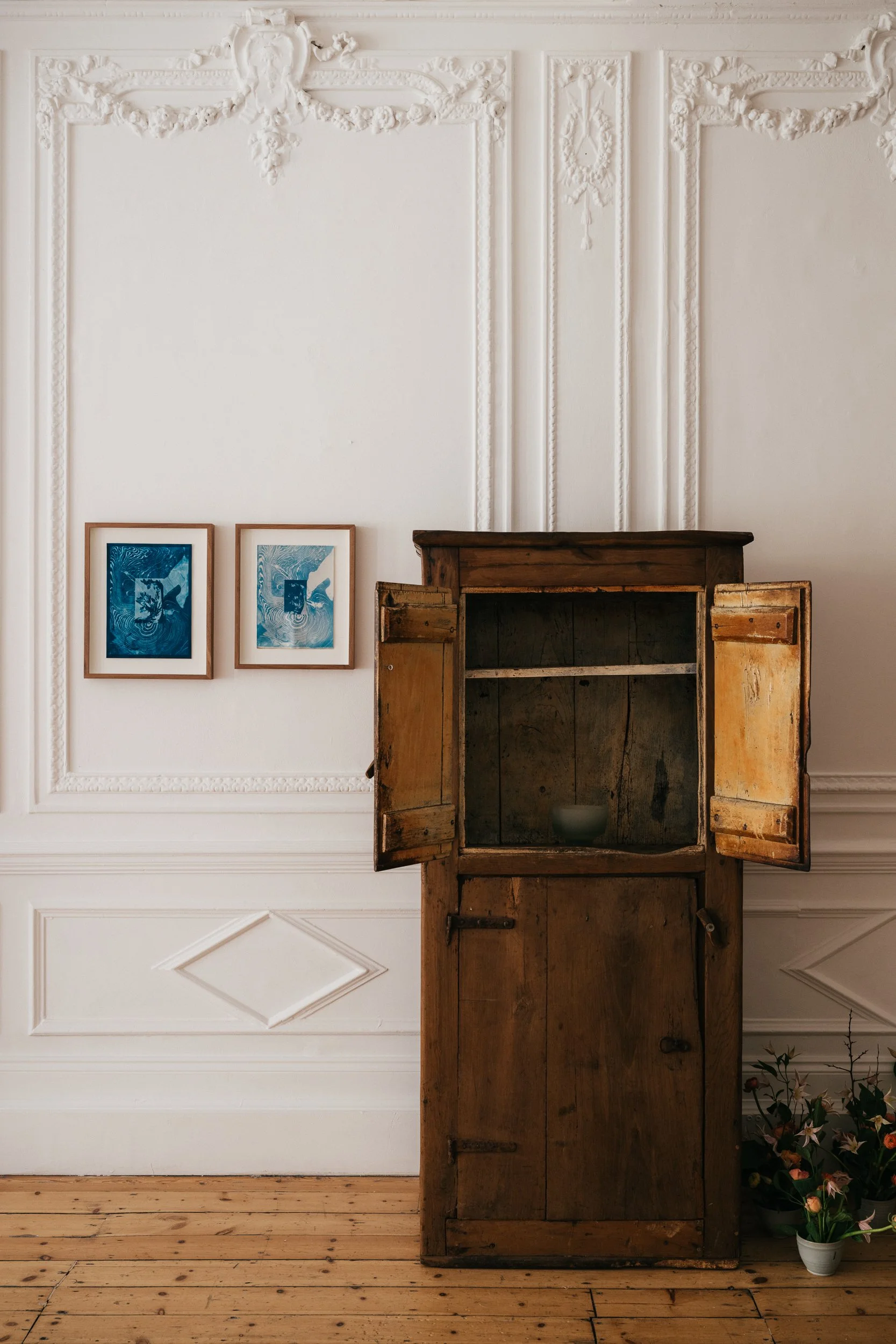
When I was pregnant I found that all the images I used to have in my mind’s eye completely disappeared. It was sort of like a blind panic. I found that I just could not make drawings of anything that was too figurative, and I began to make abstract, monochrome work. That was so much about trying to kind of connect with this being that I couldn't see but that I could feel.
How has motherhood affected your work?
In terms of the end result, what I've been making has looked very different year on year. I think what I'm finding are my sort of core themes and questions and interests that are consistent, even whether I'm flipping between abstract or figurative languages. I’ve got lots of drawings from when I was trying to conceive, and then drawings from early pregnancy, and then drawings in between my children. I'm just in a place where I'm trying to work out how they sit together.
When did your fascination with blue - or, more specifically, indigo - arrive?
There is this very interesting thing, when you look at artists and you look at the palette that they work with, so often the colors are an extension of their visual makeup. I grew up being put in blue, because I’ve got blue eyes. I got so bored of it. But then I realised I was trying to get a handle on blue. One of my tutors commented on a monoprint of mine that it was a “really hot blue,” and was it intentional. And I thought, oh my goodness, how can you have a hot blue? From there, I then just got quite obsessed about learning all the different kinds of blues and the different temperatures that they can have, and how they might work together or not. I’ve found that even within using blue in monochrome you can play with the different temperatures. That changes the feeling. Is the blue receding or advancing? Blue has become the color that I've always kind of come home to.